
As sensor technologies are increasingly deployed in high-temperature industrial and scientific environments, maintaining signal integrity has become one of the most persistent engineering challenges. Applications ranging from industrial furnaces and combustion monitoring to environmental sensing near heat sources require sensors to operate reliably under sustained thermal stress. While advances in sensing elements and electronics have improved sensitivity and response times, the physical interfaces that connect sensors to their environments remain a critical—yet often underestimated—factor in overall system performance.
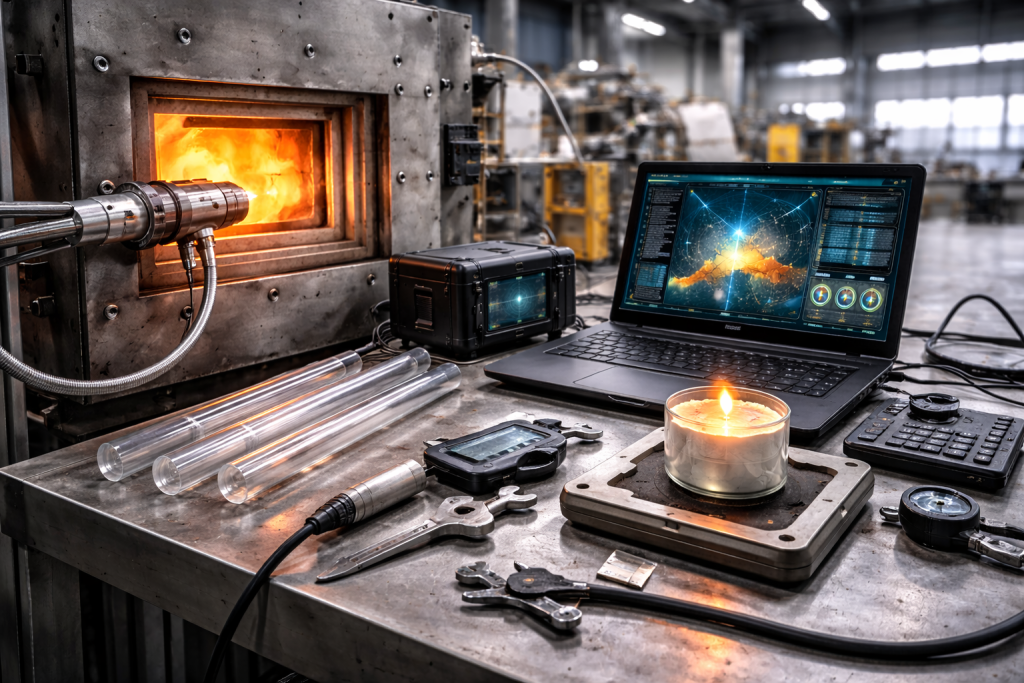
In high-temperature conditions, even small physical changes in sensor interfaces can distort measurements. Thermal expansion, material degradation, and chemical interactions can alter signal pathways, introduce noise, or cause gradual drift that undermines long-term reliability. For this reason, system designers increasingly examine not only sensor specifications but also the materials used in housings, conduits, and interface components. In many engineering discussions, high-temperature resistant quartz tubing for advanced sensor interface stability is referenced as an example of a material solution when dimensional stability and chemical inertness are required to protect signal pathways exposed to heat.
As sensors become integral to automated control systems, predictive maintenance platforms, and compliance monitoring, the tolerance for signal degradation narrows. Ensuring stable interfaces under thermal load is no longer a secondary consideration—it is a prerequisite for trustworthy data.
Why High-Temperature Interfaces Are Vulnerable
High-temperature environments impose multiple stressors on sensor interfaces simultaneously. Thermal cycling causes repeated expansion and contraction, which can loosen fittings, alter geometries, or fatigue materials over time. Elevated temperatures can accelerate oxidation, corrosion, or chemical reactions between interface materials and the surrounding environment. In some cases, outgassing or surface changes introduce contaminants that interfere with sensor response.
Electrical and optical signals are particularly sensitive to these effects. Variations in physical alignment or surface condition can change signal transmission characteristics, leading to attenuation, reflection, or time delays. These issues may not produce immediate failures, but they can gradually degrade measurement accuracy, making long-term monitoring unreliable.
Material Properties That Support Signal Integrity
To mitigate these risks, materials used in high-temperature sensor interfaces must exhibit predictable behavior under thermal stress. Key properties include low thermal expansion, resistance to chemical interaction, and structural stability over repeated heating cycles. Materials that meet these criteria help preserve the geometry and surface conditions that signal transmission depends on.
In optical sensing applications, for example, maintaining a consistent optical path is essential. Any deformation or surface contamination can affect light transmission and detection accuracy. Similarly, in thermal or gas sensing, the physical channel through which heat or analytes reach the sensor must remain unchanged to ensure consistent response characteristics.
Designing Robust Sensor Interface Architectures
Material selection alone is not sufficient; it must be integrated into a broader interface design strategy. Robust architectures consider how materials interact with mechanical supports, seals, and connectors under high temperatures. Designers often prioritize simplicity and minimize the number of interfaces to reduce potential failure points.
In high-temperature zones, isolating sensitive electronics from direct heat exposure while maintaining accurate sensing pathways is a common design objective. Stable interface materials enable this separation by allowing sensors to remain physically protected without compromising measurement fidelity. Over time, such designs reduce maintenance requirements and improve system uptime.
Laboratory Validation and Calibration Considerations
Field performance is closely linked to laboratory validation. Before sensors are deployed, interface materials and configurations are typically evaluated under controlled conditions to assess their behavior at elevated temperatures. These tests help identify potential sources of drift, contamination, or signal distortion.
Laboratory workflows often involve thermal analysis, material compatibility testing, and repeatability studies. In these contexts, containment and reference materials must not interfere with test outcomes. Components such as high-purity quartz crucibles for precision sensor calibration and sample testing are frequently cited in technical discussions because they support reproducible testing by minimizing background interactions and maintaining stability during thermal exposure.
Reliable laboratory validation provides confidence that interface designs will perform as expected once deployed in demanding environments.
Long-Term Deployment and Drift Management
High-temperature sensor systems are often expected to operate continuously for extended periods. Over months or years, even minor interface changes can accumulate into significant measurement drift. Addressing this risk requires both material stability and thoughtful system monitoring.
Designers may incorporate reference checks, redundancy, or periodic validation routines to detect early signs of interface degradation. However, these measures are most effective when the underlying materials exhibit slow, predictable aging rather than abrupt or erratic changes. Stable interface materials therefore play a central role in managing long-term drift.
Implications for Industrial and Scientific Applications
In industrial settings, compromised signal integrity can lead to inefficient process control, increased energy consumption, or safety risks. In scientific and environmental monitoring applications, data inaccuracies can undermine research conclusions or regulatory compliance. Across these domains, the cost of unreliable measurements often exceeds the cost of investing in robust interface design upfront.
As sensor networks expand and operate closer to extreme conditions, attention to interface materials becomes a strategic consideration. Organizations that prioritize material performance alongside sensor specifications are better positioned to deploy reliable, scalable monitoring systems.
Conclusion
High-temperature environments present a unique set of challenges for sensor interface design and signal integrity. While advances in sensing technology continue to push performance boundaries, the physical materials that connect sensors to their environments remain fundamental to system reliability.
By selecting materials with stable thermal and chemical properties and integrating them into well-designed interface architectures, engineers can reduce drift, preserve signal quality, and extend sensor service life. This material-aware approach supports more reliable data generation—an essential requirement as sensors play an increasingly critical role in industrial automation, scientific research, and environmental monitoring.