
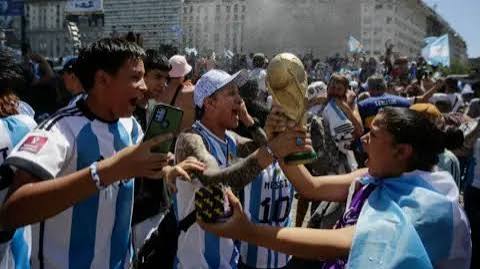
When people talk about miraculous World Cup comebacks now, the 2022 final between Argentina and France is the reference point, because both sides came back from the brink within the same 120 minutes. Argentina twice built what looked like decisive leads, France twice dragged the game level, and the match’s 3–3 scoreline before penalties turned a final into a rolling sequence of comebacks rather than a single twist. Watching this game live taught you as much about tactical adjustment and mental resilience as it did about individual brilliance from Lionel Messi and Kylian Mbappé.
Why This Final Sits at the Top of World Cup Comebacks
Many World Cup comebacks hinge on one team overturning a deficit once, but Lusail 2022 stacked multiple reversals on top of each other. Argentina went 2–0 up with a dominant first hour built on Lionel Scaloni’s proactive structure and Messi’s control of tempo, only for France to haul themselves to 2–2 in a two-minute burst through Mbappé. In extra time, Argentina surged ahead again, before France forced 3–3 from the spot and pushed the match to a penalty shoot-out.
What makes this stand out for live viewers is that each comeback felt grounded in visible tactical and physical shifts. Argentina’s early control came from compact pressing and diagonal transitions, France’s first response from structural changes and fresher legs, and the late swings from both sides reflected how space opened as intensity and fatigue collided. Rather than a single shock, you watched a match constantly resetting its narrative in real time.
Argentina’s Early Control: Shape, Pressing, and Space for Messi
For roughly 70 minutes, Argentina looked like the “better team” not just because of the scoreline but because of how they controlled the middle third and France’s left side. Scaloni’s side moved between a compact 4-4-2 and 4-3-3, with a narrow, hard-working midfield that allowed Messi to drift into pockets between the French lines while others handled most of the defensive load. Off the ball, Argentina’s counter-press limited France’s ability to launch the kind of rapid transitions that had defined Les Bleus’ threat earlier in the tournament.
On screen, you could see Argentina’s wide players tracking back to double on Kylian Mbappé and Ousmane Dembélé, while their full-backs chose moments to step up without leaving huge gaps behind. The first goal from Messi’s penalty and the second from Ángel Di María, finishing off a sweeping move, came from sequences where Argentina regained the ball, broke quickly into wide space, and then attacked the French back line before it could reset. For live viewers, this phase offered a clear cause–effect pattern: compact defending plus sharp transition play translated directly into a two-goal lead.
How France Turned the Match: Substitutions, Shape, and Mbappé’s Two-Minute Burst
Didier Deschamps’ changes around the hour mark—introducing fresh attackers and adjusting France’s attacking shape—were the turning point. With more forward runners and a greater willingness to commit numbers centrally, France started winning second balls higher up the pitch and isolating Mbappé closer to the penalty area. The penalty that made it 2–1 and Mbappé’s volley for 2–2 within about two minutes were the visible payoff of that shift: France finally converted pressure into shots from prime zones.
From a live viewing perspective, you could see Argentina’s block dropping slightly deeper, runs tracking back a fraction slower, and French players occupying more aggressive starting positions between the lines. Once Mbappé’s first goal went in, the stadium’s energy, French pressing intensity, and Argentina’s passing decisions changed instantly. The equaliser moments later showed how quickly a team with elite forwards can turn a 2–0 deficit into level ground when their structure supports constant penalty-box presence rather than isolated counters.
Extra-Time Swings: Fatigue, Risk, and the Second Argentine Comeback ดูบอลสด
Extra time produced its own mini-comeback story, with Argentina finding the energy and structure to push ahead again despite the shock of losing a two-goal lead. Their third goal, finished by Messi after a chaotic sequence in the French box, came from a phase where Argentina regained some control of territory and second balls, committing bodies forward even though both teams were visibly drained. For viewers, this was a reminder that comebacks are not only about the chasing team; the side that has just been pegged back can still reassert itself if it manages tempo and spacing intelligently.
When you ดูบอลสด matches like this, focusing on how teams use possession after big emotional swings changes what you see. Argentina’s willingness to continue combining through midfield rather than simply clearing long showed that they were not mentally broken by France’s comeback, and that mindset opened the door to their own second surge. As players tired, gaps appeared between French lines, creating the broken-play sequences that often produce late goals in extra time.
France’s Second Response: Penalty Box Presence and High-Leverage Moments
Even after conceding again, France still had enough structure and belief to force a second comeback, drawing level at 3–3 via another Mbappé penalty. The build-up to that moment reflected continued emphasis on getting the ball into and around the box quickly, trusting that repeated actions would eventually produce ลิ้งดูบอลสด changy calls, scrambles, or shooting chances. For live viewers, the lesson was that comebacks at this level rarely come from one isolated attack; they emerge from ten or fifteen minutes where one team consistently plays in the most dangerous zones while the other struggles to push the game back upfield.
By the time Mbappé converted his third goal of the night, the match had fully entered high-variance territory. Every clearance, duel, and long ball felt like it could decide the final, and both sides had half-chances even after 3–3. Seeing that unfold live showed how sustained territorial pressure and penalty-box occupation can keep a comeback alive even when legs are gone and structures are fraying.
A Live-Match Checklist for Spotting World Cup Comebacks
Argentina vs France 2022 offers a practical checklist for viewers who want to recognise a potential comeback while it is still forming. Instead of waiting for the first goal to drop, you can look for recurring patterns that usually precede dramatic reversals.
- Territory shift: Track where the game is played over five-to-ten-minute blocks—if the trailing team locks play in the opponent’s half, a comeback is much more likely.
- Shot quality, not just volume: Notice whether the chasing side is getting touches inside the box or only speculative long shots.
- Substitution intent: Look for changes that add runners and penalty-box presence, or fresh ball-winners who can keep attacks alive.
- Declining counter threat: If the leading team stops threatening on transitions and only clears without support, their lead becomes more fragile.
- Body language after a goal: Watch how both teams behave immediately after the first comeback goal—do the leaders regain composure, or do they retreat deeper and lose passing options.
In Lusail, these signals appeared clearly in the minutes before France’s first two goals and again before their third. Applying the same checklist in other tournaments helps you spot when a “finished” game is actually primed for a swing, letting you read comebacks as the result of visible trends rather than pure shock.
Comparing Argentina–France 2022 With Other Iconic World Cup Comebacks
Argentina–France stands alongside other famous World Cup turnarounds—like Belgium’s 3–2 comeback against Japan in 2018 or earlier classics highlighted by historical retrospectives—but it compresses several of those storylines into one match. Where many comebacks involve a single late surge by one team, this final featured both sides overturning deficits multiple times, layered on top of the pressure unique to a World Cup decider.
From a tactical viewing standpoint, it also showcases modern trends: extreme attacking talent on both sides, in-game formation shifts, and coaches willing to sacrifice structure for overloads when time runs out. When you watch other World Cup comebacks—whether group-stage shocks or knockout epics—you can compare them to this match by asking: Did the trailing team sustain territorial pressure, adjust its structure, and increase penalty-box presence the way France and Argentina did, or did the swing come from a single freak event.
Summary
The 2022 World Cup final between Argentina and France has earned its place as the defining “miraculous comeback” in tournament history because both teams recovered from near-defeat in the same match while playing at an exceptionally high tactical and technical level. Argentina’s early control, France’s rapid 2–2 response, Argentina’s extra-time surge, and France’s second comeback to 3–3 showed how structure, substitutions, and mental resilience combine to produce layered reversals rather than one-off shocks. For live viewers, using this final as a template turns future World Cup games into richer experiences, helping you see comeback potential early and understand why some matches become instant classics while others fade despite similar scorelines.