
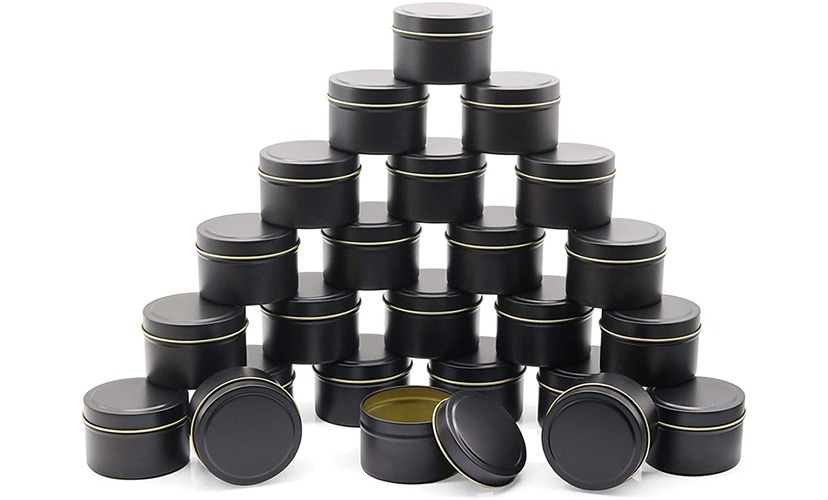
When evaluating packaging, candle brands often face a recurring question: Do black tin cans absorb more heat, potentially affecting candle safety and performance? This concern is not unfounded. Color psychology, heat transfer theory, and consumer perception often clash, leading to confusion—especially for brands that mass-produce scented candles. In fact, many assumptions about black tins and heat absorption are either exaggerated or misunderstood. Candle tins are produced in a controlled environment where material thickness, coating technology, ventilation, and wax formulation are far more important than the color itself. Tsing uses practical production experience rather than purely theoretical models to clarify misconceptions and facts about black candle tins.
Black Tins and Heat Absorption: Understanding the Basic Physics
Dark colors do indeed absorb more radiant heat than light colors under direct sunlight. However, candle tins are not directly exposed to solar radiation. Inside a burning candle, the flame generates heat, which is then transferred outward through the wax and metal walls. Therefore, black candle tins made from the same material and thickness are no different from candle tins of other colors.
The metal material, not the color, is the primary factor in heat conduction. The heat conductivity of the tin-plated steel used in high-quality candle tins is not affected by the color of the outer coating. The black coating on candle tins is typically a thin layer of heat-resistant paint, which does not significantly alter their thermal conductivity. From a production perspective, we test candle tins under actual candle-burning conditions rather than using theoretical heat-absorption models. Test results consistently show that the temperature difference is very small, with virtually no impact on the candle’s safety or burning performance.
Black Candle Tins vs. Other Candle Tins: What Do the Tests Show?
In comparative tests conducted by Tsing, black, silver, and white candle tins revealed a key conclusion: wall thickness and wax volume are more important than color. When identical candle tins filled with the same amount of wax are burned under controlled conditions, the surface temperature differences remain within a narrow range—well below safety thresholds. Black tins may feel warmer to the touch because their matte surface reduces reflectivity. Still, infrared temperature measurements show that their temperature is not significantly higher than that of other surface treatments. For candle brands that need to make decisions based on data rather than subjective feelings, this distinction is crucial. From a compliance perspective, qualified black candle tins produced by professional manufacturers meet the same safety and performance standards as other metal candle tins.
How to address the real risks?
Candle safety depends on the system design, not the packaging color. Issues such as overheating, container breakage, or excessive external temperatures are almost always related to the wax formulation, wick selection, or overfilling, not the tin itself. High-quality black tins are specifically designed to withstand sustained high temperatures without deformation or coating damage. The black coating used on modern candle tins is high-temperature cured and meets food-grade or cosmetic-grade standards, ensuring stability at candle burning temperatures. Furthermore, the internal coating protects the metal from wax corrosion, maintaining the candle’s structural integrity throughout its lifespan. After proper testing, the black tins are not only safe and reliable but also suitable for retail and private label branding.
Does temperature affect fragrance diffusion?
Another common concern is whether black tins affect fragrance diffusion due to their heat-retention properties. In reality, fragrance diffusion depends on the melt pool diameter, wick size, and wax chemistry, not the container color. Black tins neither significantly enhance nor inhibit fragrance diffusion. However, black-canned candles do have an indirect advantage: they help elevate the product’s perceived premium quality. Candle consumers often associate black packaging with luxury, richness, and sophistication. This perception can enhance the fragrance’s emotional experience without altering the candle’s actual burning characteristics. From a branding perspective, black canned candles help enhance consumer perception of product value while maintaining consistent product performance.
Tin Cans for Premium Candle Brands: Practical Design Advantages
In addition to superior technical performance, black candle tins offer several practical advantages for candle brands. First, compared to lighter-colored tins, black tins more effectively conceal soot marks, keeping the candle looking clean and new throughout its use. Second, black candle tins pair perfectly with minimalist labels, embossing, or foil stamping, eliminating the need for elaborate decorations. From a supply chain perspective, black tins are versatile. They are equally suitable for scented candles, travel-size candles, seasonal collections, and gift sets. Its durability makes it an ideal choice for e-commerce shipping. Despite some misconceptions about their heat resistance, these advantages explain why black candle tins remain consistently popular.
Ultimately
So, do black candle tins absorb heat? Theoretically, yes, but not in a way that affects the safety or performance of the candle. In practice, color plays a negligible role compared to material quality, structural design, and candle formulation. The idea that black tins inherently pose a risk is a misconception, unsupported by either production data or actual testing data. For candle brands seeking premium aesthetics, durability, and versatility, black metal tins remain one of the most reliable packaging options.