
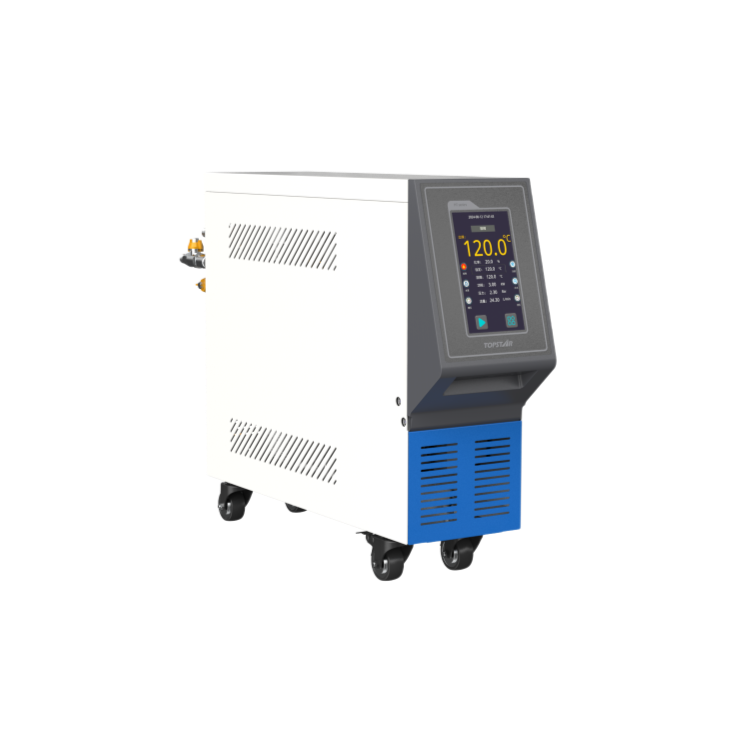
In the injection moulding industry, optimizing cooling and heating processes is crucial for ensuring product quality, shortening production cycles, and reducing costs. Mould temperature controllers play a key role in regulating mould temperatures, enabling manufacturers to minimise part defects while maintaining high productivity. One key factor in improving the efficiency of a mould temperature controller is the fluid flow rate. The coolant or heating fluid flow rate within the mould temperature controller is critical for effective heat transfer and directly affects the overall temperature regulation process. Understanding how to optimise this flow rate can improve heat transfer efficiency, shorten production cycles, and save energy, all of which are essential for any manufacturer looking to enhance production performance.
What is the fluid flow rate in a mould temperature controller?
The fluid flow rate in a mould temperature controller is the rate at which coolant or heating fluid circulates through the system’s heat-exchange channels. Typically, the fluid can be water or oil, depending on the specific requirements of the moulding process. The system measures flow rate in litres per minute (LPM) or gallons per minute (GPM), indicating the speed at which the fluid flows through it. A higher flow rate means more fluid circulates within the mould temperature controller, potentially accelerating heat absorption and dissipation. However, both excessively high and low flow rates negatively impact heat transfer efficiency, making balanced flow rates crucial for optimising temperature control.
How Fluid Flow Rate Affects Heat Transfer Efficiency
Fluid flow rate is directly related to the heat transfer efficiency of a mould temperature controller. Heat transfer is the process of transferring heat energy from one medium (the mould) to another (the fluid). The stronger the fluid’s ability to absorb heat and remove it from the mould, the more efficient the temperature control system. At optimal flow rates, the heat-exchange process is maximised, resulting in efficient mould cooling and heating. When the fluid flows at a suitable velocity, it can absorb and evenly dissipate heat, ensuring the mould temperature remains stable throughout the injection moulding cycle. However, excessively slow flow rates can lead to insufficient cooling, while excessively high flow rates can cause turbulence, reducing the system’s ability to maintain mould temperature stability.
The Role of Coolant in Fluid Flow Rate and Heat Transfer
The type of coolant used in a mould temperature controller plays a crucial role in fluid flow rate and its efficiency. Water-based coolants are widely used due to their low cost, high specific heat capacity, and high heat absorption efficiency. Water absorbs a significant amount of heat before its temperature rises substantially, making it an ideal coolant for most applications. However, for more demanding moulding processes requiring higher temperatures, oil-based coolants can be used. Oil has a higher boiling point than water, making it suitable for high-temperature processes, but it may need more precise control of the fluid flow rate to ensure optimal heat transfer. The choice of coolant depends on the specific requirements of the manufacturing process, including mould material, product size, and cycle time.
How to Optimise Fluid Flow Rate for Maximum Efficiency
Optimising fluid flow rate is a balancing act that requires an understanding of the interactions among several factors, including fluid viscosity, mould design, and the control of temperature needed. First, you must calibrate the mould temperature controller to match its flow rate to the mould size and complexity. Smaller moulds may require lower flow rates for precise temperature control, while larger moulds may require higher flow rates for faster heat dissipation. Furthermore, using flow control valves enables manufacturers to adjust the flow rate to meet specific process requirements, ensuring the coolant circulates at the ideal speed. Maintaining the correct flow rate ensures efficient heat transfer and stable mould temperature, thereby reducing cycle time and improving the overall quality of the moulded parts.
Fluid Flow Rates of Different Types of Mould Temperature Controllers
Different types of mould temperature controllers have distinct functions in managing fluid flow rates. High-end mould temperature controller systems are typically equipped with advanced control algorithms that automatically adjust fluid flow in response to real-time temperature measurements. This dynamic adjustment continuously adapts to changing cooling or heating demands, optimising heat transfer efficiency. In contrast, simpler mould temperature controller systems may require manual flow adjustment, which, while potentially less precise, is still effective in specific applications. Choosing the correct type of mould temperature controller is crucial, considering your desired level of flow control and how it integrates with your injection molding machine.
Why is fluid flow rate necessary for mould temperature control?
Fluid flow rate is a key factor in optimising the performance of a mould temperature controller. By precisely controlling the flow rate of coolant or heating fluid, manufacturers can improve heat transfer efficiency, shorten cooling times, and ensure more consistent product quality. Understanding how fluid flow rate affects the entire moulding process is essential for selecting the right mould temperature controller and achieving optimal results. Whether you use water-based or oil-based coolants, maintaining optimal flow rates is key to improving injection moulding efficiency and productivity. Ultimately, optimising fluid flow rate can lead to greater energy savings, shorter cycle times, and better moulding profits.